

Growing up, I always believed that the richest stories weren’t told in books but in the smells, textures, and flavors of a far‑off meal. Travel for the palate turns cities into living menus: one day you’re sipping spicy soup by a canalside, the next you’re sampling patisserie treats in a sunlit alley. Over the years, I’ve chased fragrant broths, late‑night taco carts, secret neighborhood bakeries, and ambitious tasting menus. This list isn’t a sterile ranking — it’s a scrapbook of cravings, surprises, and dishes that left me speechless.
Each city here is a crucible of culinary identity — a place where tradition and innovation mingle on plates and in markets. I selected them not just for their “big name” reputation, but because each will astonish, challenge, and delight your inner foodie in distinctly local ways. Whether your tastes skew street food or fine dining (or both in the same afternoon), join me on this global feast.
So without further adieu, let’s dive in!
1. Hanoi, Vietnam
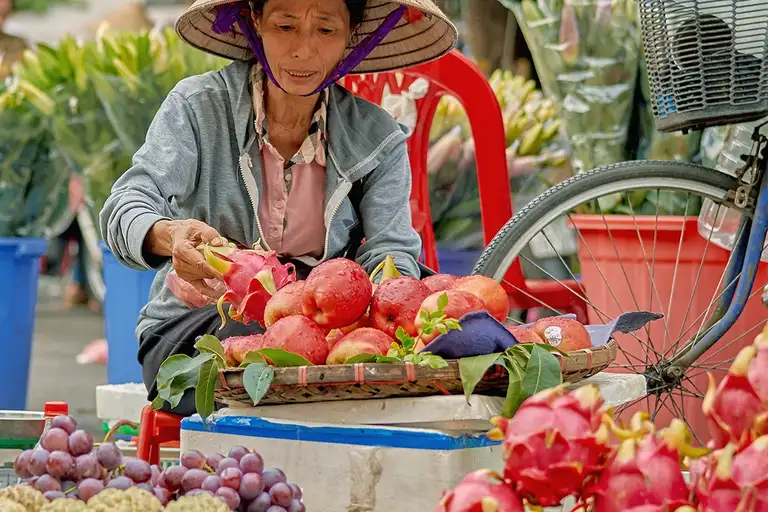
When I landed in Hanoi, I expected sidewalk chaos—and I got it, in the most delicious way possible. The Old Quarter hums with scooters, lantern glow, and the scent trails of simmering broth and grilled meat. In Hanoi, food is a public festival, and every lane has a chef’s whisper.
Start with pho — but not just anywhere. Here, the northern style is lighter, more aromatic, with subtle sweetness and layered depth. Raise your nose to catch the steam, then lift the slurp and feel the complexity of bone broth, ginger, star anise, and fresh herbs. It’s simple yet precise. As you wander deeper, you’ll find bún riêu — tangy crab noodle soup dotted with fried tofu, pork, and aromatic herbs, often under a railway overpass deep in the Old Quarter.
Don’t skip chả cá lăng, a Hanoi specialty of turmeric‑marinated fish grilled tableside with dill and scallions, served with rice noodles and a riot of dipping sauces. The sizzling of fish meeting the hot skillet, mingling with dill and smoky char—this is dinner theater you can eat.
Hanoi’s snacks are bite-sized wonders: bánh cuốn (soft rice rolls with minced pork and wood ear mushrooms), nem cua bể (crispy crab spring rolls), cà phê trứng (egg coffee). That last one is pure delight — a decadent, silky foam of whipped egg yolk over robusta coffee, sometimes served hot or iced depending on your mood.
I often found myself perched on plastic stools at dusk, surrounded by diners and scooters, chasing plates of grilled meat (like pork in bamboo tubes or caramelized fish) or steaming bowls. Hanoi taught me that sometimes the most spectacular meals come from the humblest settings.
By the time you leave, your memory won’t be of landmarks—but of that sharp snap of pickled shallots, the fresh chew of herbs, and the perfect balance of sweet, sour, salty, umami in a single broth.
Book a food and drink tour in Hanoi:
2. Guadalajara, Mexico
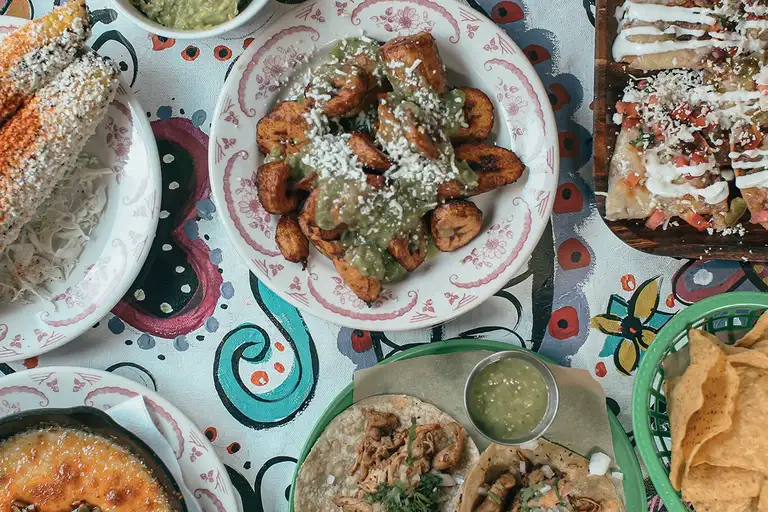
Guadalajara felt like Mexico’s heart, full of warmth and flavor rooted in tradition yet boldly open to reinvention. As capital of Jalisco state, it’s famous for birria, torta ahogada, tejuino, and deep roots of tequila culture (yes, Guadalajara is one of tequila’s spiritual homes).
Your first mission: find a birria stand (often goat or beef) bubbling in its spicy consomé. Dip tortillas into the rich broth, fold, and bite — the silky meat, the glowing red sauce, the broth you drink like soup after. That duality — taco and soup — makes birria here addictive. Then turn to torta ahogada (“drowned sandwich”), a playground sandwich drenched in spicy tomato sauce and layered with pork or carnitas. It’s messy, fiery, perfect.
Head into markets like Mercado San Juan de Dios and Mercado Libertad, and you’ll find stalls selling pozole, enchiladas tapatías (a Guadalajara variation with flavorful sauce), ceviche, and fresh salsas that smolder your lips. Try tejuino, a fermented masa drink sweetened with piloncillo and often served icy with lime and salt. It’s refreshing and a little wild.
What I loved most in Guadalajara was the balance: you’ll see old men sipping atole on quiet corners, children snacking on esquites (corn cups with crema and lime), and ambitious chefs reimagining traditional dishes in glass‑walled eateries. As evening descends, rooftop bars and hidden mezcalerías hum with music, lit by string lights, tequila glasses clinking.
By lunch time your belly might protest, but passion wins: sample tacos de barbacoa (slow‑cooked meat), tamales wrapped in banana leaf, or pescado zarandeado (grilled fish with smoky char). Don’t leave without chasing local street desserts: jericallas, flan, candied fruits. Guadalajara taught me that celebration lives in the everyday tortilla and that bold sauces are a love language.
Discover street food in Guadalajara:
3. Paris, France
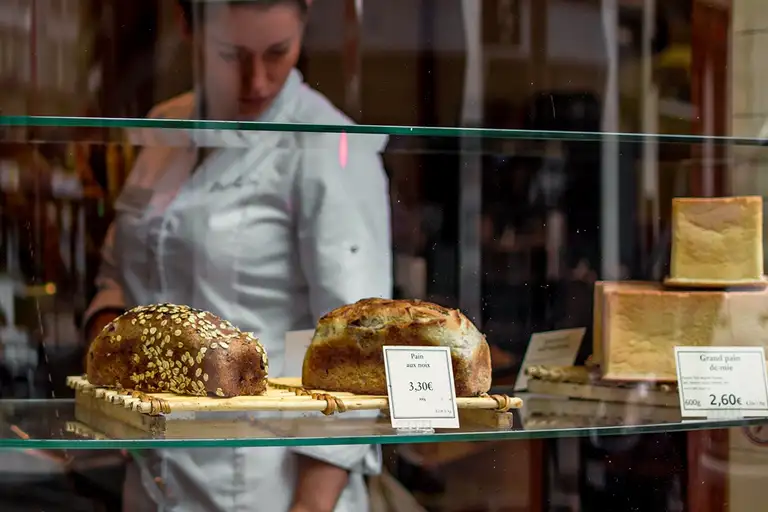
Paris isn’t just the city of lights — it’s a city of sauces, butter, crusts, and ritual. Walking into the first boulangerie at dawn, you’ll confront the smell of fresh baguettes and croissants so buttery your eyes water. Breakfast becomes a reverent pause: flaky croissants, jam, café au lait, and the slow joy of butter.
Moving into lunch, the Parisian café steak‑frites is an eternal classic: crisp fries, a perfect steak, perhaps Béarnaise or bordelaise sauce, and a house salad on the side. At neighborhood bistros, order coq au vin, duck confit, escargots in garlic butter, onion soup crowned with bubbling cheese and bread. These are the dishes that whisper of time — long cooking, slow reductions, layered technique.
Of course Paris also thrives in modern kitchens. Chef‑driven menus rework classics: a deconstructed mille‑feuille here, avant-garde plating there, but always in dialogue with patisserie tradition. At dessert counters, you’ll taste éclairs, tarte tatin, macarons, soufflés, and pain au chocolat that threatens to melt on the tongue.
Wandering Le Marais or Saint‑Germain, I often stumbled into sleek sandwich shops offering jambon‑beurre sandwiches on fresh baguette or creperies with buckwheat galettes and cider. Even street food in Paris can surprise: falafel in the Marais, Vietnamese bánh mì (a nod to France’s colonial past) in unexpected corners.
At dinner, soak in mood by choosing a candlelit brasserie or a Michelin‑starred temple. Savor the wine pairings, the sauces you’ll scrape with your bread, the transition from amuse‑bouche to cheese to petits fours. I remember a night at a tiny left‑bank place: duck liver mousse, delicate fish in beurre blanc, and a chocolate torte so rich I staggered out at midnight. Paris reminded me that food is art, ritual, and pleasure all stirred together.
Book a food and drink tour in Paris:
4. New Orleans, USA
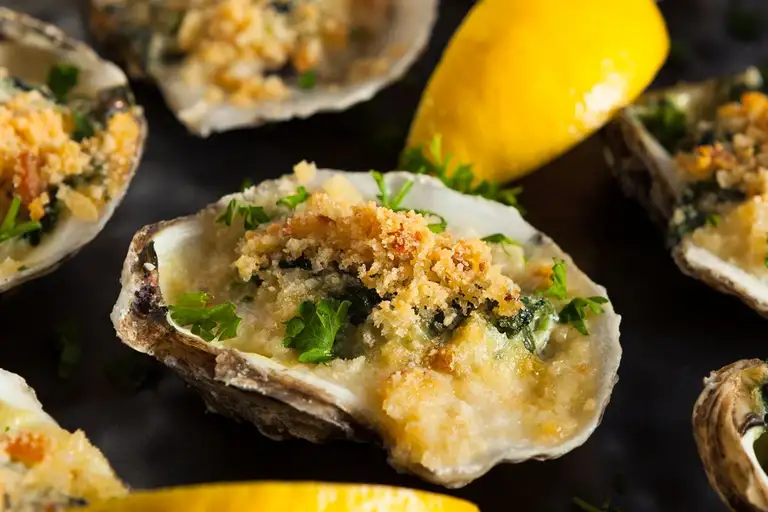
If Paris is ceremony, New Orleans is spontaneous festival — the city where music, history, and food swirl in one heady gumbo. From the moment I arrived, the smells of frying seafood, andouille sausage, and simmering roux beckoned me into neighborhoods where food and culture cannot be separated.
Start with gumbo — a bowl of soulful depth, where dark roux, okra, and rich stock create velvet darkness dotted with shrimp, chicken, sausage, or crab. Just hearing someone say “gumbo tonight?” made me sprint home. Then there’s jambalaya, the rice dish so comforting you imagine your grandmother stirring it. Po’ boys stuffed with fried shrimp or oysters, dressed in lettuce, tomato, pickles, and a slash of remoulade — crunch and brine in every bite.
Make time for beignets at Café du Monde, cloud‑like pillows of fried dough rolled in powdered sugar, best washed down with chicory coffee at dawn. Then there’s the praline — sticky, sweet, pecanty — and bread pudding swimming in whiskey sauce.
But New Orleans’s strength lies in layers: in Creole vs Cajun kitchens, in the seafood markets, in late‑night jazz clubs where muffulettas wait behind riveted doors. I stumbled into narrow alleys and found po’ boy purveyors deep in the French Quarter, or tucked into cozy diners in the Garden District offering crawfish étouffée with rice. Midtown restaurants reimagine classics: softshell crab in cornmeal crust, banana Foster flambé tableside.
One night I joined locals for a crawfish boil under strings of lights in a backyard. Hands and faces red with spice, laughter rising through steam — that moment taught me that New Orleans is less about mastery and more about feeling it in your bones.
Leave with a mouthful of remoulade, a memory of creole spice, and the knowledge that in NOLA, food is music, ritual, and history on a plate.
Take an authentic cooking class in New Orleans:
5. Tokyo, Japan
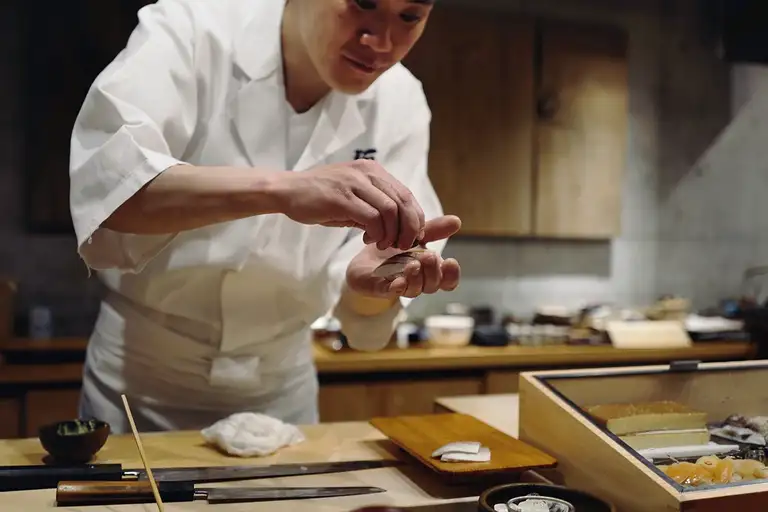
Tokyo is a city of precision and paradox: neon streets overflow with ramen bowls, sushi masters wield razor blades behind glass counters, and little izakayas tinker with flavors at midnight. In Tokyo, you taste discipline and joyful curiosity in every bite.
You must begin at sushi — not as a tourist, but in a neighborhood bar where eggshells crack and sea urchin changes daily. The rice, the cutting, the brush of soy — all of it matters. Visit Tsukiji Outer Market or Toyosu for fish still wriggling, then hop into nearby counters where chefs sculpt nigiri while murmuring to the fish.
Then there’s ramen: deep tonkotsu broth from pork bones, a swirl of fat, chashu pork slices, crisp seaweed, scallions. Tokyo has ramen alleys where you pick your base (shio, miso, shoyu) and tweak toppings until the bowl fits your soul. Try tsukemen (dipping ramen) and abura soba (noodles with sauce instead of broth).
Wander through golden alleys of Shinjuku and Golden Gai at night: yakitori skewers, grilled over charcoal, humming and crackling with flavor. Order izakaya bites: grilled eel, karaage chicken, agedashi tofu, sake or shochu in small cups.
Don’t ignore sweets: mochi, wagashi (artisanal Japanese confections), green tea–flavored everything, matcha soft serve, and delicate jelly desserts in clear cubes.
I recall sitting in an unassuming basement ramen joint near Shibuya at 11 p.m.: steam clouding the low ceiling, a small queue, slurping the tonkotsu after midnight, surrounded by salarymen. That was when I felt Tokyo speak: humility, mastery, and a love of repetition done to perfection.
Tokyo taught me that food is ritual, obsession, and heart — and that the best meals are as much about the moment (late night, quiet counter) as the ingredients.
Book a foodie tour in Tokyo:
6. Madrid, Spain
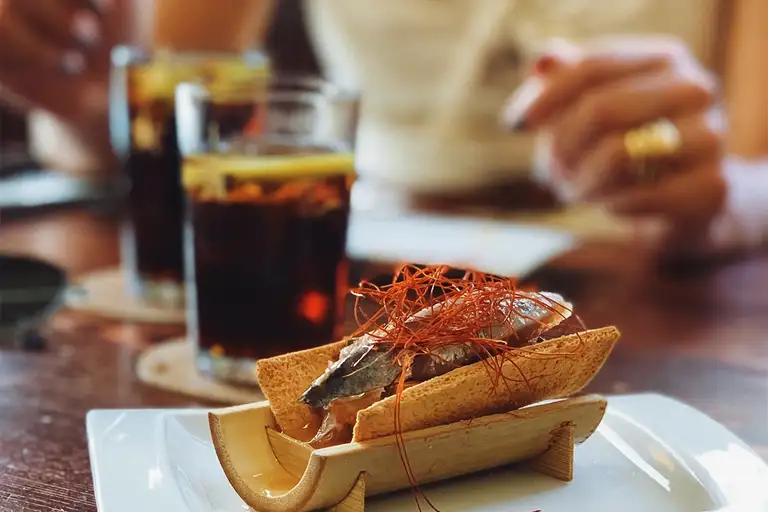
Madrid is confident: big flavors, big plates, big nights. But the beauty is in how those parts unfold — tapas first, then pintxos, then paella at dusk. The Spanish capital feels like a culinary symphony, where regions of Spain come to sing together.
My Madrid ritual began at Mercado de San Miguel, wandering stalls selling jamón ibérico, seafood tapas, croquetas, gildas (skewers of olive, anchovy, pepper), pulpo a la gallega (octopus atop potatoes, sprinkled with pimentón). Eat standing, elbow to elbow, drink small glasses of verdejo or caña.
Then make time for cocido madrileño — a rich chickpea and meat stew. Traditionally served in courses: broth first, then meats and veggies. It’s hearty, soulful, deeply local. For lunch, pause at a neighborhood taberna for bocadillo de calamares (fried squid sandwich) near Plaza Mayor — simple, salty, perfect with beer.
In the evening, the tapas crawl begins: patatas bravas with spicy sauce, gambas al ajillo (garlic shrimp), croquetas de jamón, chorizo al vino, pimientos de padrón, boquerones en vinagre. In some neighborhoods, tapas bars compete on creativity — mini‑tostadas with jamón and figs, ceviche inspired by Latin America, local cheeses with quince paste.
For dinner, go bold: risotto de setas, bacalao al pil pil, yonaki (grilled beef), or modern Spanish fusion in restaurants pushing boundaries. For dessert, churros con chocolate at late‑night chocolaterías, or tarta de Santiago from Galicia.
I was once in Lavapiés, chatting with locals over wine and tapas until the bars dimmed at dawn. Madrid taught me food is social, bold, and unafraid to mix tradition with play. Here, every corner bar is a potential revelation, and the night is as long as your appetite.
Try some tapas in Madrid:
7. Bangkok, Thailand
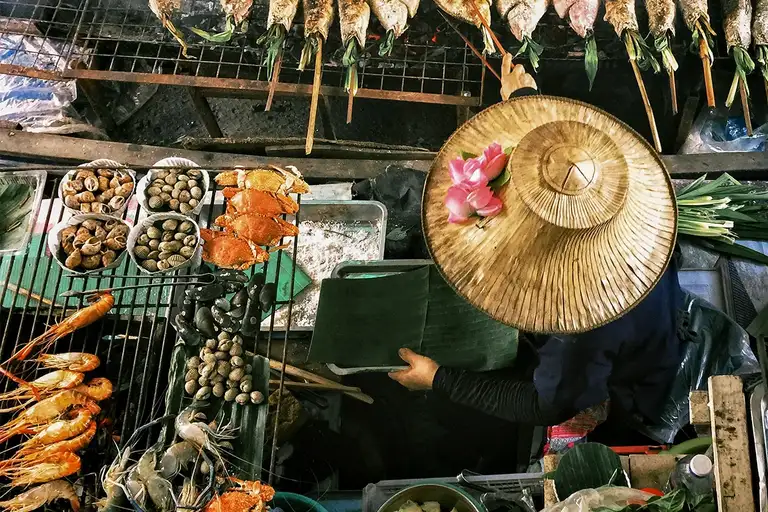
Bangkok demands to be eaten. At first light, it calls you into streets of steam and sizzling woks. The city’s aroma—lemongrass, fish sauce, chili, coconut milk—is its first introduction, and if you ignore it, you’ll wander lost.
Start east: tom yum goong (hot‑and‑sour shrimp soup), tom kha gai (coconut chicken soup), khao soi (nth-curry noodle soup with crispy topping), pad Thai (everyone’s favorite, but try the charcoal stalls that flip it theatrically). At every corner, there’s som tam (green papaya salad) with chili, lime, and peanuts crunching in your mouth.
In markets like Chatuchak (weekend) and Yaowarat (Chinatown), I followed my nose to boat noodles, grilled chicken skewers (gai yang), mango sticky rice, kang som, massaman curry. Street vendors stir, fry, and grill with speed and concentration. At dusk, street carts park near BTS stops and alleys, offering late-night snacks until the moon dips.
Bangkok surprises you: ice‑cream rolls made eye‑catchingly, sushi stands beside stir-fry shacks, fine-dining restaurants reimagine Thai cuisine with molecular touches, and rooftop bars pour floral cocktails over city lights. Street food at Saphan Taksin pier or Silom night market may feed you better than expensive restaurants.
One memorable night I sat on a plastic stool in a side alley behind Sathorn, eating phad krapow moo (stir-fried pork with basil and chili) over rice, sweating and laughing with locals. The heat, the chili sting, the sweet-salty sauce — it was unforgettable.
Bangkok showed me that food is kinetic, alive: the blur of woks, the chatter, the tensions between sweet, sour, spicy. It taught me that some of the best meals you’ll ever eat happen between midnight and dawn, under a streetlamp.
Discover street food in Bangkok:
8. Rome, Italy
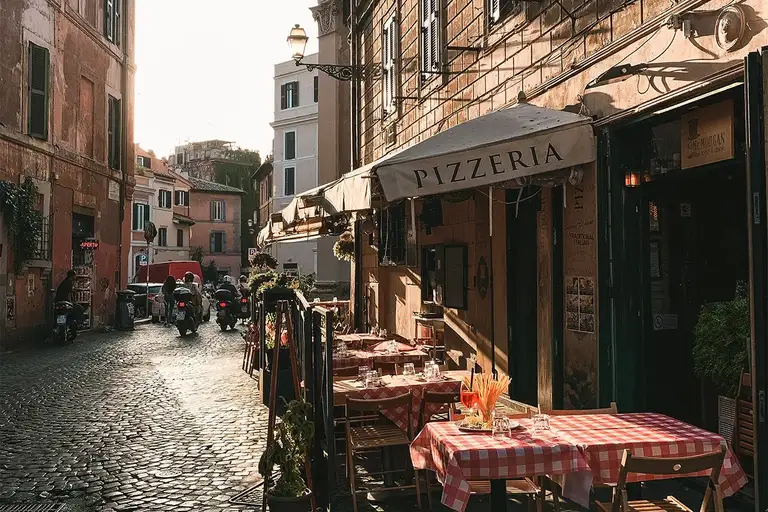
Rome feels like a cookbook you’re walking through: rusticity meets ritual. The first slice of pizza al taglio in a morning walk, the midday plate of carbonara, the late‑evening gelato — every day in Rome is edible poetry.
Start with pizza bianca or pizza al taglio — airy squares sold by weight, oil‑glazed, topped simply with rosemary or cheese. Walk until you find one that crackles just right. For lunch, choose one trattoria and let yourself sink into cacio e pepe (Pecorino, black pepper, pasta), amatriciana (tomato, guanciale), or carbonara (egg, pecorino, guanciale) — no cream, always technique.
Roaming Campo de’ Fiori or Trastevere, you’ll see supplì (fried rice balls with tomato and mozzarella), carciofi alla romana (Roman‑style artichokes), porchetta (roasted spiced pork), and ossobuco in some corners. In the evening, restaurants will bring you antipasti of cured meats, cheeses with honey or jam, and seasonal vegetables. Then your pasta course, a main, and a digestif.
But Rome’s magic also lies in gelato shops that hum at midnight, little neighborhood pizzerias feeding locals at 1 a.m., and silvery espresso bars where cappuccinos vanish within a minute. I had one dinner at a tiny osteria off Via del Governo Vecchio where the candlelight flickered and our spaghetti was perfection — I still taste the olive oil, garlic, just-cooked tomato.
A night walking along the Tiber, black sky overhead, Rome whispered to me — its food is ancient, generous, and alive. It taught me that technique needn’t be stiff; it can feel warm. That ingredients — good olive oil, fresh eggs, local produce — are everything. And that sometimes a midday pasta and an evening gelato define a day’s happiness.
Make pizza in Rome:
9. Reykjavik, Iceland
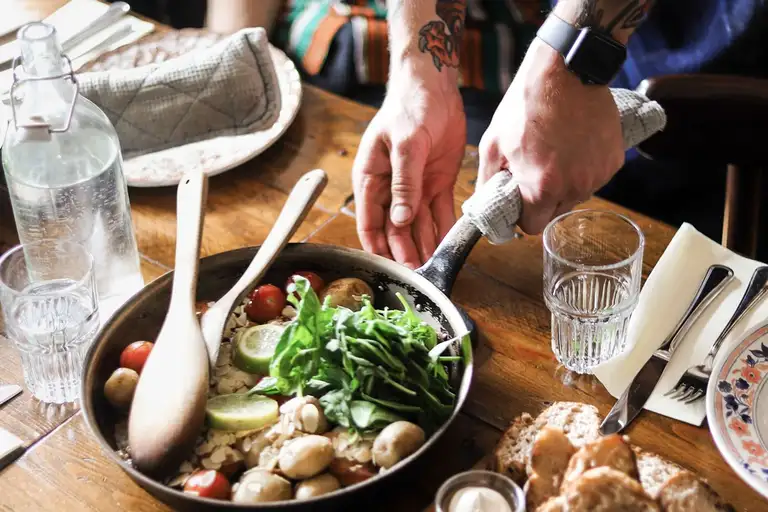
Iceland startled me. In Reykjavik, the food scene is sparse in population but rich in daring. This is a place where chefs coax flavor from cold seas, volcanic soils, and the long light of summer nights.
The first mouthful I remember: langoustine, sweet and briny, plucked from nearby waters and grilled simply so the flavor sings. Fish is everywhere — cod, Arctic char, plaice — served with elemental sauces (butter, herbs, citrus). Pair it with skyr (thick cultured dairy) or root vegetables from geothermal greenhouses.
I tried rammasøla, Icelandic fermented fish, and hákarl (fermented shark) — for the adventurous palette. These are not casual bites. They are local medicine, tradition, a connection to the land and sea. (Be warned: not all are for first-night dinners!)
Reykjavik also hosts restaurants daring enough to mix local and global. Think reindeer or lamb with seaweed broth, microgreens grown in lava rock, local berries for dessert. Bakeries offer kleina (twisted doughnuts) and rúgbrauð (dense rye bread baked underground). Cafés serve flatkökur (rye flatbread) with local toppings, smoke‑cured salmon, or lamb pâté.
One evening, I walked to the old harbor, lights dancing on the fjord, and stepped into a minimalist coastal restaurant. The chef served a tasting menu: sea urchin starter, wild herbs, crowberry sorbet. Each dish felt wild, seasonal, elemental. At midnight, light persisted, and tasting dishes under soft twilight felt like a dream.
Reykjavik taught me that food is landscape: wind, water, cold, and that restraint can sing. That minimalism and boldness are kin. That digging into regional identity — even in a small city — can yield surprises.
Book a magical food tour in Reykjavik:
10. Beirut, Lebanon

Beirut awakened my senses with its generosity, spice, and blend of East and West. The Levant’s heartbeats echo in every mezze spread, grill mark, and mint leaf.
In Beirut, meals begin in a hum: mezze after mezze — hummus silky and unctuous, moutabal / baba ganoush smokey eggplant, tabbouleh bursting with parsley and citrus, fatteh layered with chickpeas, yogurt, and crispy bread, kibbeh raw or fried, warak enab (stuffed grape leaves). Order too many — they’ll bring them anyway.
Then comes the grill: shish taouk, kafta, lamb chops, whole fish, brushed with olive oil and citrus. Serve with manakish (flatbread with za’atar), warak, and pickled turnips. I found myself inhaling the scent of za’atar in alleyways, grabbing bites of labneh sprinkled with olive oil. Finish with mouneh (preserved foods) or baklava, and sip arāk or mint tea.
Walking Hamra Street or Mar Mikhael, I followed the sizzle of charcoal and laughter. One evening I joined locals at a rooftop shisha bar where the grill smoke mingled with the sunset. Plates of lamb shoulder, fattoush salad, and flatbread arrived. Across the city, hip Beirut restaurants are reworking tradition: wagyu kafta, modern Lebanese desserts, and Beirut’s street food scene — shawarma, falafel, sfiha — compete with fine dining.
One of my favorite meals was in a narrow dining room near Gemmayzeh: slow-braised lamb shoulder, mujadara, and crisp eggplants. The owner recited family recipes between courses. Beirut taught me that food is memory and rebellion, that you cook with your heart, and that hospitality means feeding you until you can no longer move.
11. San Sebastián, Spain

If Spain were a painting, San Sebastián (Donostia) would be the brushstroke of genius: coastal waves, Basque strength, and pintxos artistry. This city taught me that tapas-level bites can reach haute heights.
Stroll along Calle 31 de Agosto or Parte Vieja and let pintxo bars draw you in: gildas (olive, pepper, anchovy), txistorra (Basque sausage), bacalao pil pil (cod in emulsion), foie gras pintxos, mushrooms sautéed in garlic and oil, tiny skewers of octopus or beef with local touches. Each is a miniature masterpiece.
Then move to seafood: txangurro (stuffed crab), merluza a la koskera (hake in green sauce), razor clams, sea urchin, grilled turbot. Pair with txakoli, the Basque wine, crisp and slightly fizzy — perfect with salted ocean breeze.
For dessert, try kokotxas or luscious crema catalana with local flair. Charmingly, chef Juan Mari Arzak and his descendants built modern Basque cuisine from pintxo roots, and many restaurants in the region are internationally celebrated.
One rainy evening I ducked into a pintxos bar with tiled walls and wood beams. Bartenders handed me toothpicks; I moved from bar to bar, nibbling small plates, chatting with locals over cider and wine — playful, communal, perfect. Then I sat down in a seaside restaurant and had a multi-course Basque dinner, ending with salted caramel ganache paired with local cheese.
San Sebastián taught me that greatness can live in the small — tiny bites packed with precision, region, heart. It reminded me that a foodie doesn’t need grandiosity; you just need reverence for ingredient, craft, ease.
Try pintxos in San Sebastián:
12. Kyoto, Japan
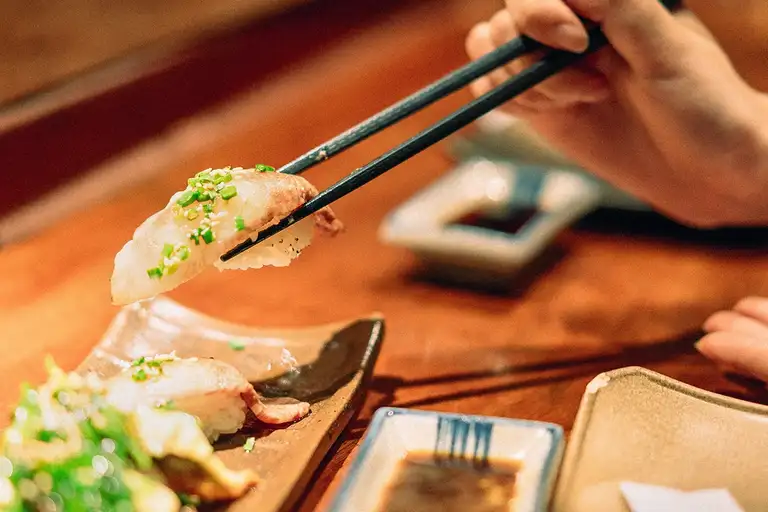
If Tokyo is disciplined flash, Kyoto is silent ritual. Here, food is ceremony, spiritual, seasonal, steeped in centuries of tradition. Kyoto taught me that to taste Japan deeply, you sit with the seasons, the gardens, the precision.
Begin in temples and tea houses: kaiseki (multi-course haute cuisine) rooted in Buddhist vegetarian tradition. A course of seasonal vegetables, a light dashi, a morsel of simmered fish — each plate like a poem. The change in garnish from spring to summer to autumn is sacred.
Wander Gion’s alleyways toward yudofu (simmered tofu) at wooden restaurants, or obanzai (home-style Kyoto cooking) in small intimate eateries. Try matcha sweets, yatsuhashi (cinnamon rice cakes), dorayaki (red bean pancakes). In Nishiki Market, sample tsukemono (pickles), uni on rice, fresh soy milk, grilled eel.
I once had a kaiseki dinner overlooking a stone garden, candlelight dancing, tasting eight courses: seasonal sashimi, grilled ayu fish, delicate vegetable consomme, matcha parfait. The silence in that room felt absolute — broken only by the clink of chopsticks.
At dusk, I found a tiny yakitori stall near the Kamo River: skewers of chicken, scallion, liver, heart — charred just right, served with sake. The contrast between ritual and street was a doorway: both are Kyoto, both honored, both real.
Kyoto taught me that food is mindfulness, change, history. That the most luxurious moment is the quiet one. That when you taste the first true seasonal vegetable or the perfect piece of fish, you know where you are.
Attend an beautiful tea ceremony in Kyoto:
13. Charleston, USA
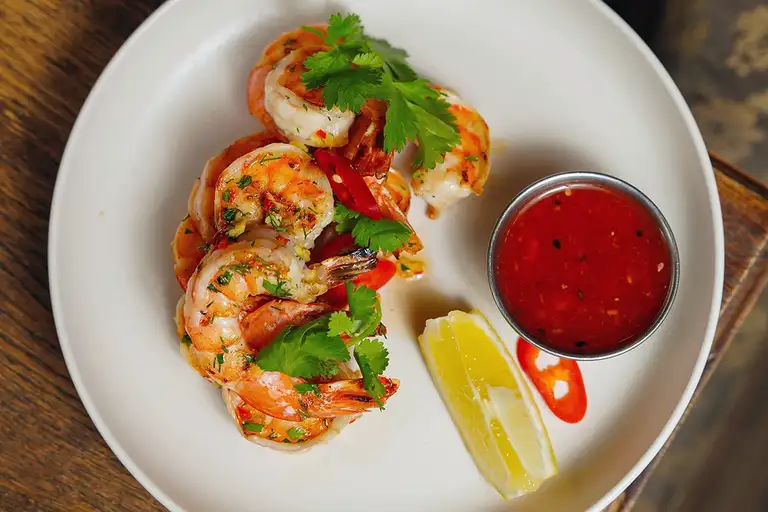
Charleston surprised me. It’s not Paris or Tokyo, but in its low-slung streets, pastel houses, mossy oaks, it holds a deep, soulful food identity — a melding of Southern tradition, sea, and refinement.
Start with lowcountry shrimp and grits: stone-ground grits swimming in buttery sauce, shrimp seared, bacon, scallions — simple but elevated. Then try she-crab soup, rich and delicate, with a splash of sherry. For lunch, go to a deli and order pimento cheese on white bread or fried green tomatoes.
Seafood is central: oysters, crab cakes, fish tacos, gulf fish grilled with citrus and herbs. Pull‑up to a dockside shack and order fried shrimp by the pound. For dinner in a historic district, try Duck Liver Mousse, braised short ribs, collard greens with smoke, cornbread with jam.
One evening I walked to a rooftop restaurant overlooking the steeples and harbor, sipping sweet tea with local bourbon, tasting a tasting menu of local ingredients — heirloom tomatoes, Carolina gold rice, stone‑ground cornmeal crusts, local shrimp. The chef came out to talk about the water table, the inshore reefs, the legacy recipes.
Charleston taught me regional pride isn’t parochial; it’s an invitation to savor place. That even in America, food feels local — of rivers, salt marshes, plantations, harvest. And that a shrimp and grits done right can make you believe in alchemy.
Take a food and drink tour in Charleston:
14. Singapore, Singapore
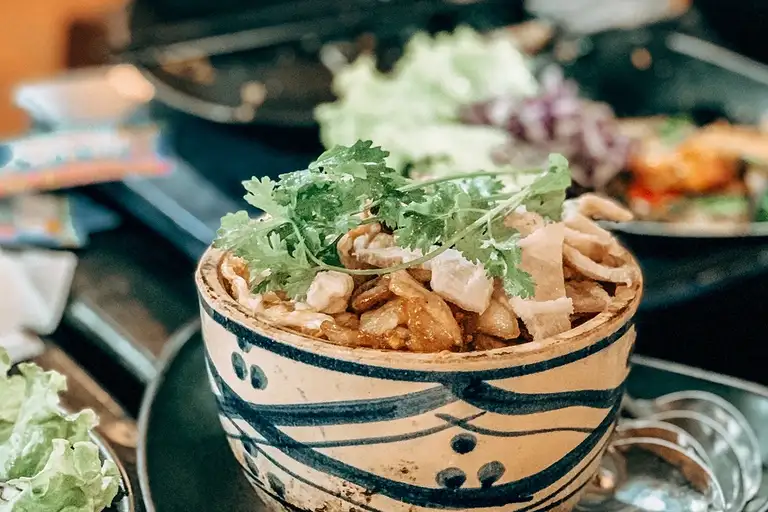
Singapore is food as identity: Malay, Chinese, Indian, Peranakan, colonial British all layered over hawker centers and glamorous restaurants. It’s dense, chaotic, thrilling — a microcosm of Asia’s culinary power.
Your first stop is a hawker center: Lau Pa Sat, Maxwell, Tekka, Chinatown Complex. Order chicken rice (fragrant rice cooked in chicken stock, with poached or roasted chicken and chili-garlic sauce), laksa (spicy coconut noodle soup), char kway teow, satay with peanut sauce, fish head curry, rojak (fruit-vegetable salad with sweet sauce), Hokkien mee, kaya toast & kopi. The variety will dizzy you.
But Singapore is not just hawker food. In Tiong Bahru or Dempsey, boutique cafés offer Singapore-style brunch with curry renditions, pandan waffles, kopi concoctions. In Orchard and Marina Bay, fine dining rises: Michelin-starred restaurants reinterpret local flavors — chilli crab foam, Singapore-style desserts, fusion tasting menus invoking laksa or Hainanese chicken.
I once ate midnight chili crab by the river under lantern light, fingers slippered, sipping beer from plastic bottles. The sweet crab, chili heat, bun to sop up sauce — it was messy, joyful. The next day I sat in a minimalist café sipping kopi and nibbling kaya toast.
Singapore taught me that food is identity and experimentation. That hawker heritage and luxury fine dining can live side by side. That in a small land, you can taste entire continents.
Take a private street food tour in Singapore:
15. Lyon, France
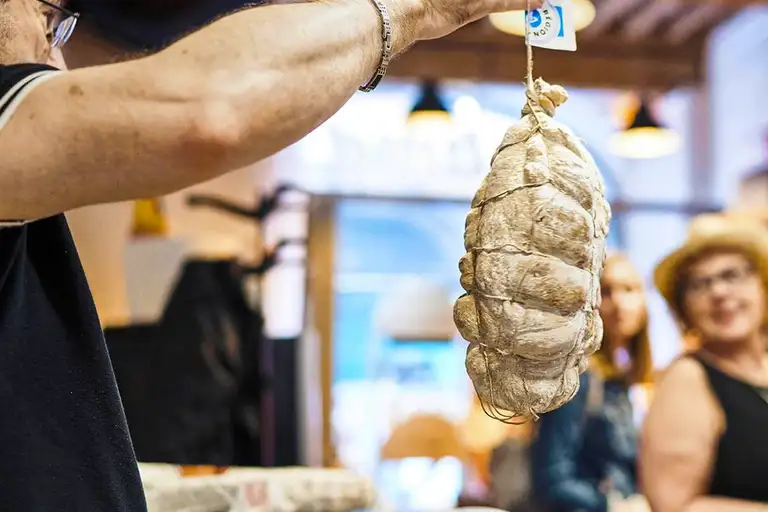
They call Lyon the gastronomic capital of France — and tasting it is akin to reading a master class in French cuisine. Here tradition, ingredient, and technique converge with pride.
Start small: in bouchons (local restaurants), order quenelles de brochet (pike dumplings in creamy sauce), coq au vin, salade lyonnaise (frisée, bacon, poached egg), andouillette (sausage of adventurous souls). The kitchen is serious about the charcuterie — rosettes, saucisson, jambon cru — and the local bugnes (fried pastries) for dessert.
Then head to the famed Les Halles de Lyon Paul Bocuse, a covered market palace of foie gras, cheeses, sausages, oysters, chocolates, truffles. Work your way stall by stall: sample Epoisses, Comté, St‑Marcellin, local chocolates, charcuterie tucked under grape leaves. I always brought back a small cooler of cheese and terrines.
In fine restaurants, chefs coax delicate sauces over meats, play with offal, reinterpret classic Lyonnais dishes with modern technique. In a candlelit restaurant below steep stone walls, I had rabbit with morel sauce, a mushroom ragout, and a chocolate mousse so light it melted. The wine list bowed to Beaujolais and Burgundy.
Lyon taught me that cuisine isn’t just flavor; it’s culture, family, market trips, lunch breaks. That pride in regional ingredient makes kitchens honest. And that a foodie can forever roam those halls, tasting new charcuterie, new cheese, new spark.
Book a local food tasting tour in Lyon:
16. Tel Aviv, Israel
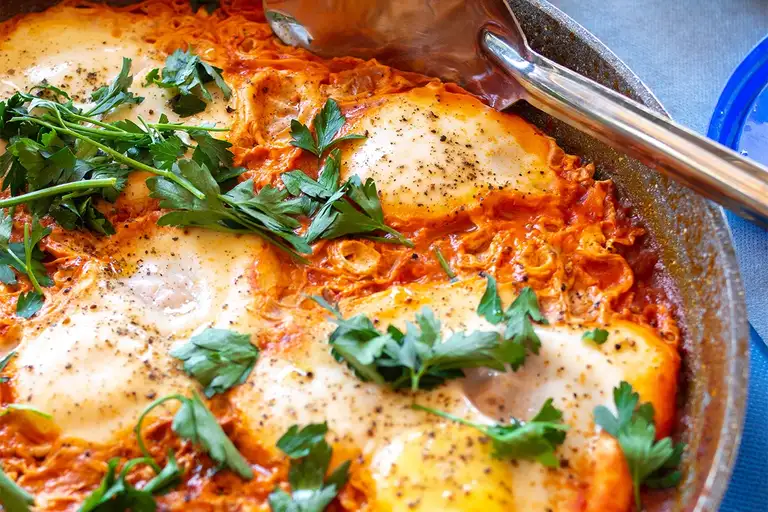
Tel Aviv feels electric: Mediterranean sun, Israeli openness, Arab and Jewish culinary interplay. In Tel Aviv, every bite is casual but bold, every street a blend of spice, olive oil, and sesame.
Start with sabich (pita stuffed with eggplant, hard-boiled egg, salad, tahini), falafel hot-crisp from the fryer, hummus creamy and wet, shakshuka simmered eggs in tomato sauce. Order malabi or halva for dessert and sip mint tea or fresh pomegranate juice.
Venture deeper: ja’jouk (roasted eggplant and peppers), kubbeh, grilled fish, chickpea salad, roast meats with za’atar, sumac onions, and flats of warm, leavened bread to scoop, tear, mash. In Neve Tzedek or Florentin you’ll find hip cafés reworking traditional recipes — labneh ice cream, tahini chocolate desserts, hummus cheekily served over truffle.
I once sat on the beach at sunset, ordering fish straight off the grill, sea breeze salty at my hair, and watched the city light up. The next night I joined a supper club in a back courtyard, tasting dishes passed around family style — a slow-cooked lamb shoulder, pickled veggies, herb salads, rice with saffron. Tel Aviv taught me that food is openness, generosity, creativity. That you eat in the sun, the street, the rooftop, and the table is always long.
Explore the markets in Tel Aviv:
17. Copenhagen, Denmark
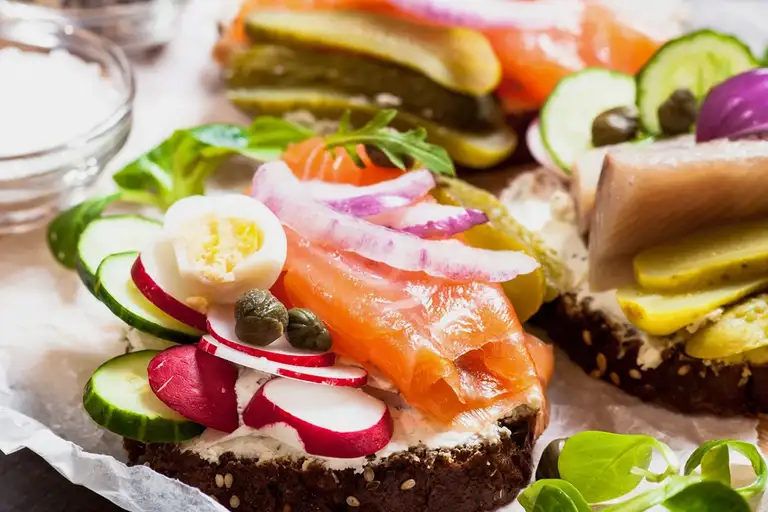
Copenhagen feels cool and curated, but beneath the minimal design lies deep obsession with technique, seasonality, and terroir. It’s the birthplace of the New Nordic movement, and the city tastes like reinvention.
Begin at Torvehallerne Market: smørrebrød (open-faced rye sandwiches) with herring, smoked fish, pickles, egg, mustard, herbs. Try rye crispbread, Danish pastries (not to be missed), and pickled specialties. At casual eateries, order frikadeller (meatballs), ragout, or seafood dishes featuring Baltic fish.
But my highlight was the tasting menus. I once sat in a glass‑walled restaurant overlooking canals, tasting courses of seaweed butter, oyster sorbet, smoked eel, foraged herbs, clean broths, and tiny morsels that exploded in your mouth. The chefs treat hyperlocal — moss, mushrooms, shellfish — as precious.
Late night I wandered into cozy wine bars serving smoked lamb, wild duck, experiments with fermentation, and creative desserts with Nordic foraged berries. I learned that in Copenhagen, winter menus shrink, summer menus bloom, and each dish draws from soil, sea, forest.
Copenhagen taught me restraint, balance, sense of place. That minimal plating can shout louder than heavy sauce. That every bite should be local, considered, necessary.
Enjoy a culinary tour in Copenhagen:
18. Lisbon, Portugal

Lisbon is salt‑air, pastel tile, old trams—and bacalhau on every corner. But beneath those clichés I found sweet surprises, strong coffee, and depth of flavor.
Begin your mornings in a pastelaria with pastéis de nata (egg custard tarts) with flaky crusts and burnt‑sugar tops, warm and creamy, best with a bica (espresso). Wander Alfama and Baixa and eat bacalhau à Brás (shredded cod, potatoes, eggs) or bacalhau com natas (cod with cream). Order sardinhas assadas (grilled sardines) in summer, ameijoas à Bulhão Pato (clams in garlic and cilantro), arroz de marisco (seafood rice), and caldo verde (kale and potato soup).
Visit Time Out Market for food stalls, local chefs, fresh dishes all under one roof. Coastal restaurants offer polvo à lagareiro (octopus roasted with potatoes and olive oil), grilled fish, sea urchin. For dessert, try ginjinha (cherry liqueur), almond pastries, and pastéis de feijão.
One evening I stood on a miradouro overlooking the red roofs and the Tagus River, eating plate after plate of grilled fish. The salt wind softened the edges, the wine chilled my throat, the city’s music spillover. Lisbon taught me that food is bold but kind — bright flavors, accessible, rooted in sea and sun. And that even a simple plate of sardines can carry stories.
Experience Lisbon’s tastiest dishes:
19. Marrakesh, Morocco
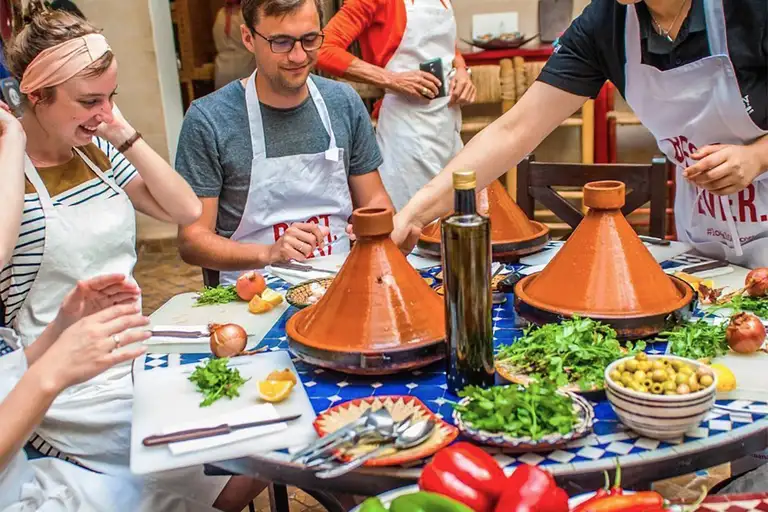
Marrakesh feels like entering a spice‑scented tapestry: saffron, cumin, preserved lemon, mint, and tagines simmering behind latticed doors. It’s sensory overload, in the best way.
Start in Jemaa el-Fna, the great square, at dusk. Smoke spirals from roasting meats, voices shout, steam rises. I chased brochettes, harira soup (tomato-lentil-soup), snail soup, pastilla (savory-sweet pigeon pie), skewers of lamb or chicken, couscous piled with vegetables. Saffron and rosewater perfume the air.
At the Medina’s riad restaurants, I sat cross-legged and tasted tagine (slow-cooked stews) — lamb with prunes and almonds, chicken with preserved lemon and olives, fish, vegetarian versions with legumes and root vegetables. Couscous on Friday nights, with vegetables, chickpeas, raisins, caramelized onions. I tasted msemen and baghrir (Moroccan pancakes), honeyed pastries, mint tea poured tall to froth.
One night I joined a rooftop terrace over the souks, as dusk settled, and a local cook delivered dishes: zaalouk (eggplant salad), zaalook (tomato-eggplant dip), khlii (preserved meat), and skewers on coals. Candlelight flickered, call to prayer echoed, mint tea warmed me. I lingered until moonlight.
Marrakesh taught me that food is ritual, community, generosity. That spices are emotion, preservation is wisdom, and nights are long when you dine slowly. I left with fragrant clothes, sticky fingers, and an ache to return.
Book a cooking class in Marrakesh:
20. Chengdu, China
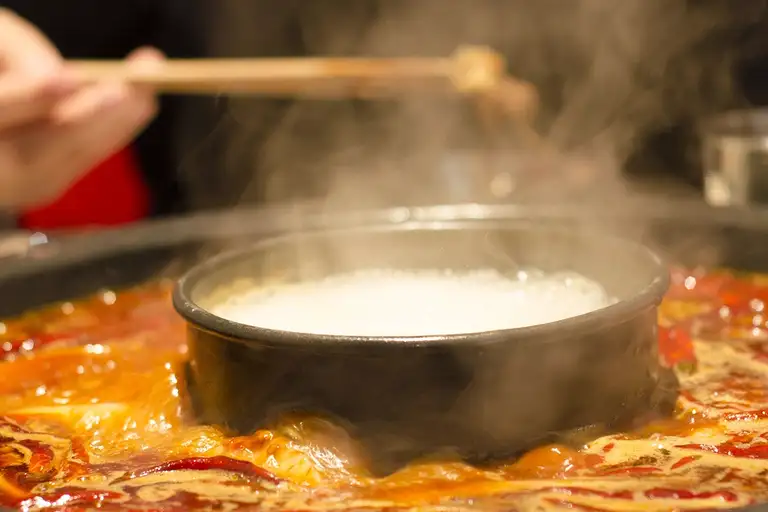
Chengdu is the beating heart of Sichuan cuisine: bold, numbing, dizzying. It was a challenge to my palate, and I loved every confrontation.
Begin with hot pot — your own simmering pot of spicy chili broth and mild broth, where you dip meats, offal, greens, mushrooms. The chillies, the numbing Sichuan peppercorns, the oil — a heat symphony. Then move to mapo tofu, kung pao chicken, twice‑cooked pork, dandan noodles — each layered with mala (spicy‑numbing) sensation.
Chengdu is also street snacks: dan dan mian (noodle bowls in chili oil), chuan chuan skewers (meat and vegetables on sticks dipped into broths), jianbing (savory crepe), roujiamo (Chinese “burger”), gua bao variations, tea house snacks of fried tofu, peanuts, pigs’ ears.
In teahouses along alleys, locals sip jasmine tea, puffing on bamboo pipes, nibbling spicy peanuts and slices of pork. In restaurants, chefs coax subtle spice, balance heat with sweet, acidity, texture. Every bite seems to dare you: burn, numb, refresh.
One night I sat at a round table in a smoky restaurant, ordering a dozen dishes to share. As chillies piled, we laughed. I remember biting into a piece of fish swimming in dark red oil, tongue tingling, eyes watering, but I kept eating. Later we sipped cool tea to reset. In Chengdu, food is a workout, a thrill, and a ritual.
Chengdu taught me that spice is poetry, that numbness can be pleasure, that flavor lives in balance of extremes. It showed me that cooking is alchemy, and heat is its language.
Discover Chendu’s finest cuisines:
Frequently Asked Questions
So what’s the ultimate food capital of the world?
Ask any globe-trotting foodie and Tokyo often tops the list. Why? Because this city doesn’t just feed you — it mesmerizes you. One day you’re sipping rich tonkotsu ramen in a back-alley joint, the next you’re savoring a meticulously prepared kaiseki course. With more Michelin stars than anywhere else and a street food scene that runs 24/7, Tokyo blends precision, passion, and play. That said, places like Paris, Bangkok, and New York are major players too, each with their own unforgettable flavor game.
Which country is the holy grail for food lovers?
Italy steals hearts — and stomachs. Think sun-ripened tomatoes, handmade pasta, wood-fired pizza, truffle risottos, and gelato that makes you weep a little. From north to south, every region is a new flavor story. But let’s not forget heavyweights like France with its elegant sauces and baked wonders, Japan with its layered umami perfection, and Mexico with bold, complex traditions. Every bite is a passport stamp.
Which country in Europe serves up the best eats?
Italy is often the go-to answer — and for good reason. Whether it’s a silky carbonara in Rome, a seafood feast in Sicily, or a chunk of Parmigiano cracked fresh in Parma, Italy is a nonstop flavor tour. France is a close rival, offering everything from luxurious duck confit and flaky croissants to epic cheese boards and Bordeaux wines. Let’s just say: Europe is delicious, but Italy might be the tastiest road trip of them all.
Which city is known for the most diverse food scene?
New York City. Hands down. You can have dim sum for breakfast in Chinatown, jerk chicken for lunch in Brooklyn, handmade pasta in Little Italy for dinner, and still find space for Korean fried chicken at 2 a.m. The city’s melting-pot culture spills onto every plate. Whether you’re craving street cart falafel or fine-dining omakase, NYC delivers — no passport required.
Which city is crowned for having the best food, period?
Paris is pure culinary romance. Yes, the Michelin stars shine bright, but even a baguette and cheese from a local market feels like a three-course moment. From buttery croissants and steak-frites to delicate macarons and coq au vin, Paris isn’t just about food — it’s about feeling. It’s where eating is an art form, and every meal comes with a side of poetry.
With all that being said, safe travels and Bon Appetit!
