

There’s a moment every traveler experiences at least once.
You’re standing in a foreign city—maybe on a quiet street in Lisbon, a busy market in Mexico City, or a café tucked away in Paris. Someone speaks to you in the local language, and for a split second, your mind races. You recognize a word or two. Maybe even a phrase. But responding? That feels like stepping off a cliff.
And yet—that’s exactly where the magic begins.
Experts have long emphasized that language immersion is the fastest way to learn a language, and travel offers the perfect environment to do just that.
But what they don’t always tell you is how to make the most of it—how to move past fear, embrace mistakes, and turn everyday moments into learning opportunities.
That being said, this helpful guide is not only designed for those who want to learn a language while traveling, it’s for those who want to experience a destination through its language, build real confidence, and come home with stories & experiences they’ll look back fondly on forever!
1. Embrace Full Immersion: Let the World Become Your Classroom
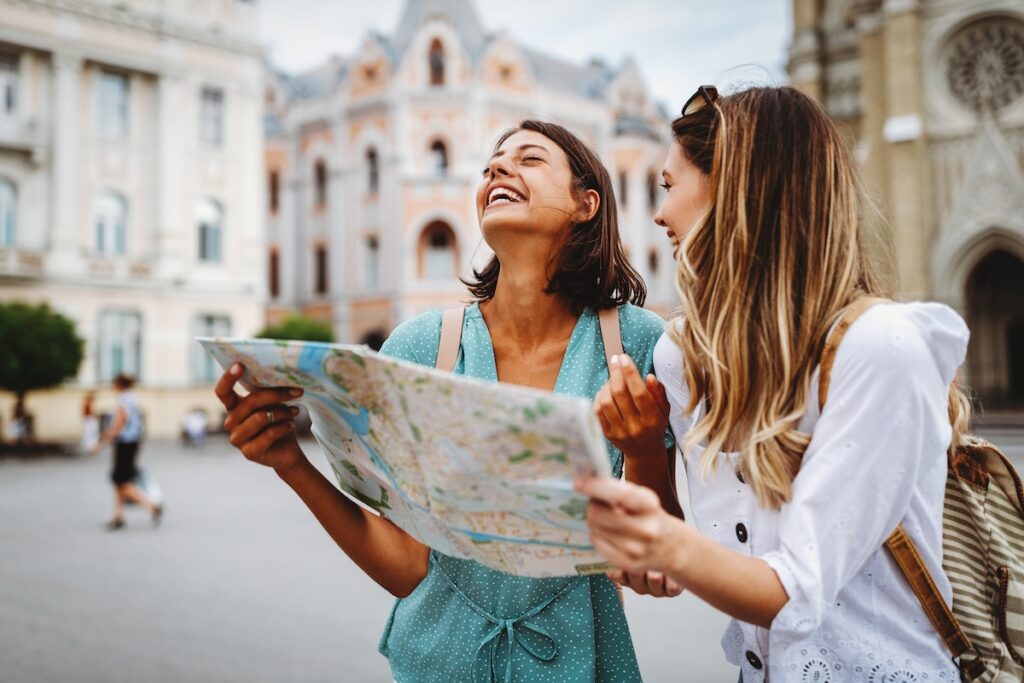
Most seasoned travelers will tell you the same thing: if you really want to learn a language, immersion is the way to do it.
And honestly, they’re right.
When you’re in a place where your native language isn’t the default, something powerful happens—you adapt. You don’t have the luxury of staying in your comfort zone, so you begin to rely on the local language in ways that feel immediate and real.
Because the truth is, traveling without communicating isn’t really an option.
Think about it. At some point, you’ll need to:
-
Read street signs
-
Ask for directions
-
Order food at a restaurant
-
Check into a hotel or make a purchase
These everyday moments quickly turn into opportunities to practice—and improve.
Even simple tasks become meaningful learning experiences. Whether you’re hopping into a taxi, booking a place to stay, or figuring out how to get from one neighborhood to another, each interaction nudges you forward.
The more you lean into these moments, the more natural the language begins to feel.
It’s not about getting everything perfect—it’s about showing up and trying.
In fact, some of the biggest breakthroughs happen when you stop overthinking and just focus on getting by. You might find yourself piecing together sentences with limited vocabulary, using gestures, or relying on context—and somehow, it works.
And that’s when the shift happens.
You realize you’re not just learning the language anymore—you’re using it.
So give yourself permission to step outside your usual habits. Let go of the need to rely on your native language, even just for a little while. Immerse yourself fully in the sounds, the conversations, and the rhythm of the place you’re visiting.
You might be surprised by how much you already understand—and even more surprised by how quickly you improve once you start trusting yourself.
🌟 Bonus Tip: Practicing language with MosaLingua can help you build confidence, learn real-world phrases, and start speaking from day one!
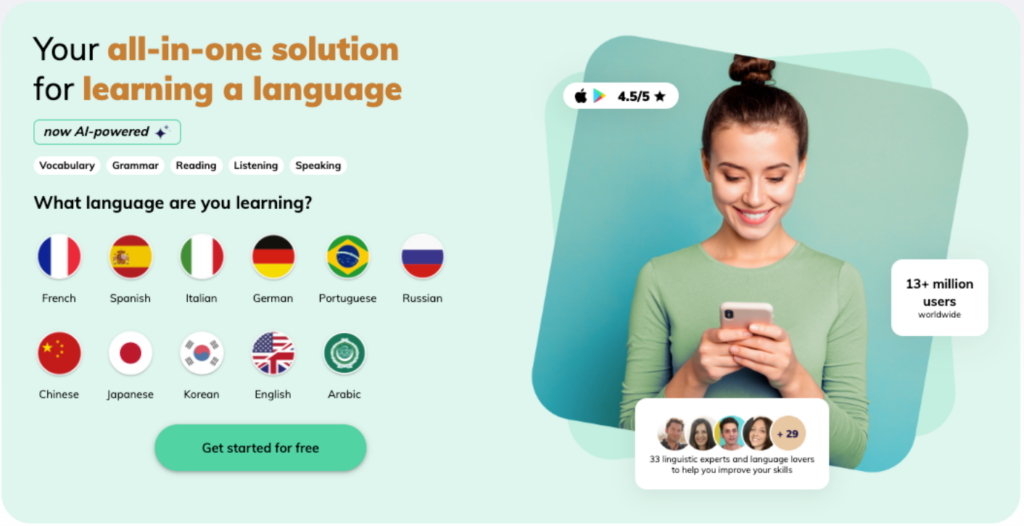
13+ Million Users – 4.5/5★ Rating
2. Learn by Listening: Mimic Native Speakers
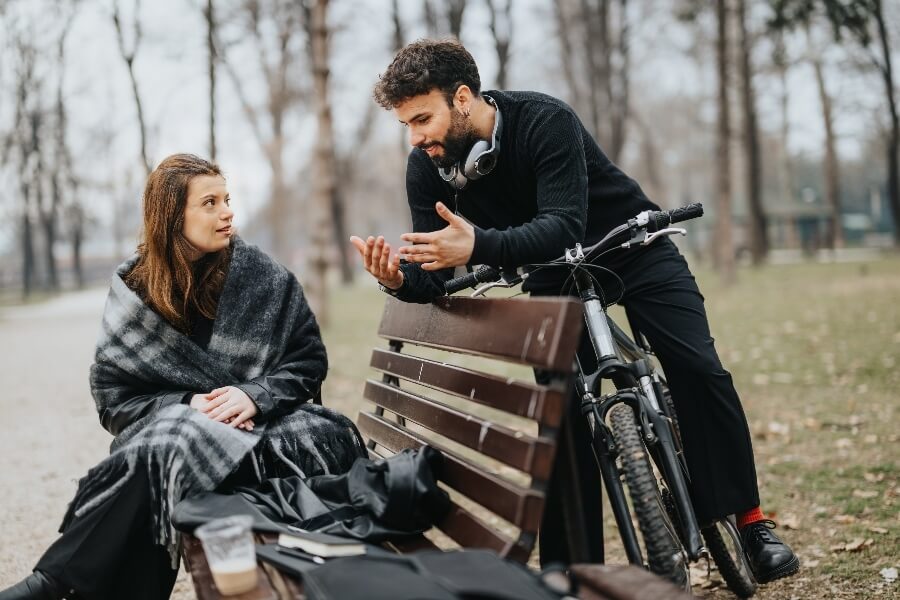
One of the fastest ways to improve while traveling is to listen like a local.
One of the biggest advantages of being surrounded by native speakers is something you can’t easily replicate in a classroom—you begin to absorb how the language actually feels.
It’s one thing to study vocabulary or read sentences on a page. It’s something entirely different to hear the language spoken around you—naturally, effortlessly, and full of personality. When you’re immersed, you start to notice subtle patterns: the rhythm of conversations, the way certain words are emphasized, and how tone can completely change the meaning of a phrase.
Think about your own language for a moment. There’s a certain way people greet each other, a natural cadence that just feels right. If someone said those same words with the wrong tone, it would probably sound a little off. The same idea applies when you’re learning a new language.
What makes this so powerful is that many of these nuances aren’t formally taught. Native speakers often use them instinctively and may not even be able to explain them. But when you’re traveling, you don’t need an explanation—you experience it firsthand. Over time, you begin picking up these patterns almost subconsciously.
That’s the real magic of learning a language this way. You’re not just learning words—you’re developing both a conscious understanding and an intuitive feel for how the language works.

How to Put This Into Practice
As you travel, keep a dictionary or language learning app like MosaLingua handy so you can quickly look up new words and phrases when they come up. But don’t stop there.
Once you learn something new, listen closely to how locals use it. Pay attention to their tone, their pronunciation, and the rhythm of their speech. Then, try it yourself.
This is where travel gives you a huge advantage—you get instant, real-world feedback. The reactions you receive from native speakers will quickly tell you if you’re on the right track. A smile, a nod, or a natural response often means you’ve nailed it.
And don’t be afraid to ask for help. In fact, this is one of the fastest ways to improve.
Try asking:
-
“Am I saying that correctly?”
-
“Can you show me how to pronounce this?”
Most people will appreciate your effort and be more than happy to guide you. That kind of direct, real-time feedback is incredibly valuable—and something you simply can’t get from a textbook.
Lean into those moments. The more you listen and engage, the more natural your speaking becomes & the more natural the language will start to feel.
🌟 Bonus Tip: MosaLingua’s unique language learning system helps you rehearse real-life scenarios so you’ll be ready for anything during your trip!
3. Let Go of Perfection: Speak First & Improve Later
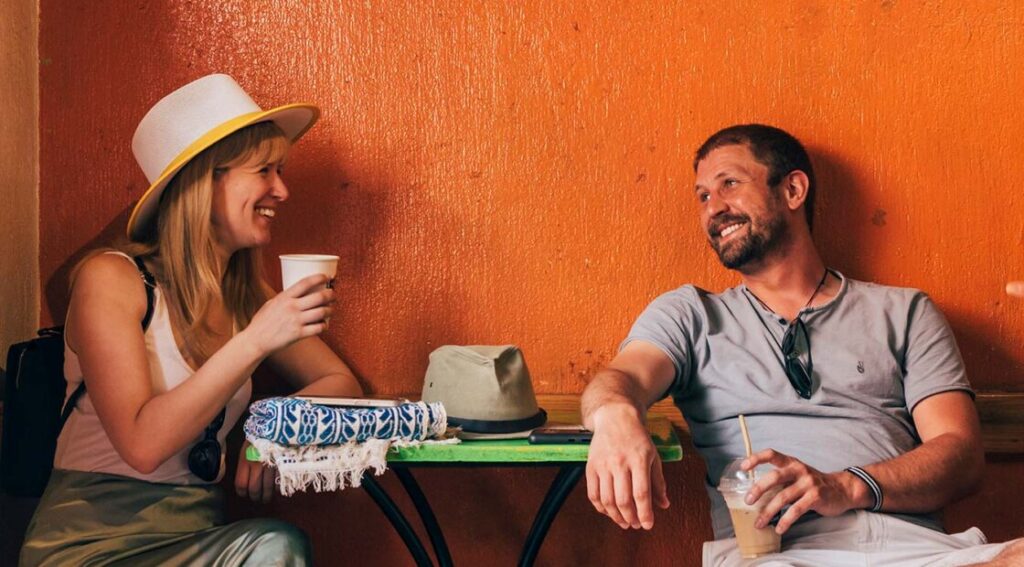
Here’s the truth: you will make mistakes while conversing on your travels—and that’s exactly how you improve.
It’s completely normal to feel a little nervous the first time you try speaking a new language with native speakers. There’s often that moment of hesitation—the pause before you speak—where you wonder if you’re about to say it wrong. And in the beginning, you probably will.
But that’s not something to avoid. It’s something to embrace!
Because the truth is, you’ll never feel fully comfortable speaking a language until you actually start using it. Waiting until everything sounds perfect in your head only holds you back from the very experiences that help you improve.
Your conversations won’t be flawless—especially early on. You might mix up words, forget phrases, or struggle to express exactly what you mean. But if you focus too much on getting everything “right,” you risk missing out on what really matters: connection.
And that’s exactly what traveling to new destination is all about.
Instead of aiming for perfection, aim for participation. Take advantage of every opportunity to speak, even if it feels a little awkward at first. Those small, imperfect conversations often become the most memorable—and the most valuable for your progress. In fact, many travelers look back and wish they had spoken more, not less.
And here’s something encouraging to keep in mind: locals generally appreciate the effort. When you try to speak their language, it shows respect and curiosity about their culture. That effort often leads to warmer interactions, more patience, and even helpful corrections along the way.
And those corrections? They’re incredibly valuable.
Instead of fearing mistakes or criticism, treat each interaction as a chance to learn. Native speakers can give you real-time feedback on pronunciation, tone, and word choice—something no app or textbook can fully replicate.
The more you open yourself up to those moments, the faster you’ll improve!
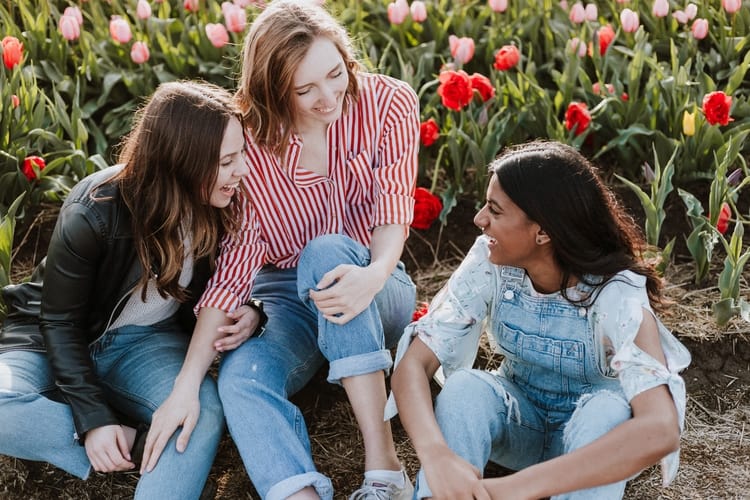
Lean Into the Conversation
When someone speaks to you, meet them halfway.
Chat with friendly locals, even if it’s just for a few sentences. If someone starts a conversation, don’t shy away from it—those are golden opportunities. And don’t forget about people whose job is to interact with travelers, like tour guides, hotel staff, and concierges.
They talk to visitors all day long. They understand that you’re learning, and most are more than happy to help you practice.
You don’t need long, complex conversations to make progress. A simple exchange, a short question, or even a quick response can build confidence faster than you might expect.
So let go of the pressure to be perfect. Speak anyway. Try anyway.
Because the more you engage, the more natural it becomes—and before you know it, you’ll find yourself speaking with ease in moments that once felt intimidating.
🌟 Bonus Tip: MosaLingua’s proven audio-based language training will help you internalize pronunciation and cadence quickly,
so you can spend less time learning & more time speaking like a local!
4. Keep It Simple: Speak in Short, Clear Phrases
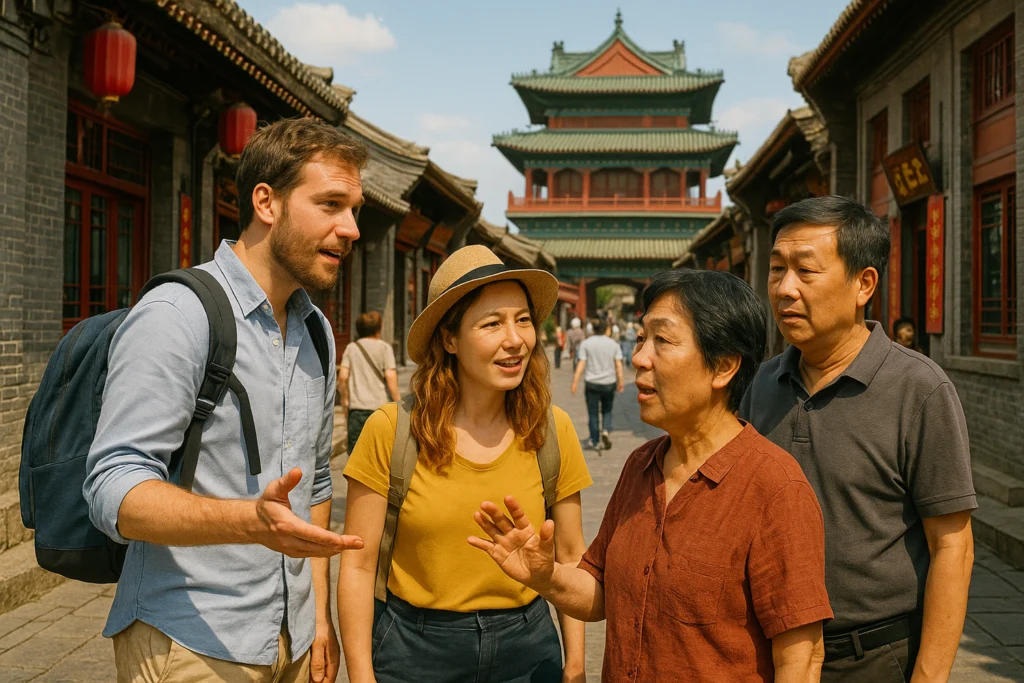
When you’re starting out, simplicity is your secret weapon.
You don’t need perfect grammar to communicate—you need clarity. Short phrases help you build confidence and avoid unnecessary confusion.
Instead of trying to form long, complex sentences, focus on using short, simple phrases. This makes communication easier and helps you build confidence quickly. There’s something powerful about realizing, “I can actually do this”—even with just a few words.
And that confidence? It grows fast!
There will also be moments when you don’t know the exact word you need. And that’s normal. But here’s the key: you don’t need perfect vocabulary to communicate.
Let’s say you don’t know the word for “sandals.” If you know “open” and “shoes,” you can still get your point across. It might not be textbook-perfect, but it works—and that’s what matters.
Most locals will quickly understand what you’re trying to say. They can tell you’re learning, and more often than not, they’ll step in to help—sometimes even teaching you the exact word you were missing.
For example:
- Instead of “Where can I buy comfortable walking shoes?”
- Say: “Shoes… walking… where?”
It works—and locals will help fill in the gaps. These moments are incredibly valuable because they turn gaps in your knowledge into learning opportunities.
🌟 Bonus Tip: Have a short flight & want to learn fast? MosaLingua focuses on the 20% of language you’ll need for 80% of situations you’ll encounter on your travels!
5. Give Yourself a Head Start: Learn the Basics Before
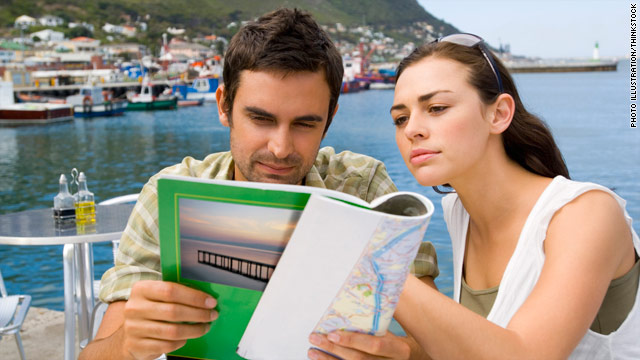
As simple as it sounds, if you want to get the most out of learning a language while traveling, one of the smartest things you can do is start before your trip even begins.
Arriving in a new country without knowing a single word can feel overwhelming. Simple situations—like ordering food or asking for directions—can quickly become frustrating if you don’t have any tools to work with.
But here’s the good news: it doesn’t take much to turn that around.
You don’t need to become fluent—but taking the time to learn the basics can completely change your experience. And even a few weeks of preparation can make a HUGE difference.
Learning just a handful of key words and phrases can give you a huge advantage. Not only will you feel more confident navigating everyday situations, but you’ll also find it much easier to start conversations.
Instead of standing on the sidelines, you’ll be able to participate. You’ll find yourself recognizing words, understanding simple exchanges, and feeling more connected to what’s happening around you.
And magical level-up moments like those is what transforms your trip from something you simply observe into something truly unforgettable!
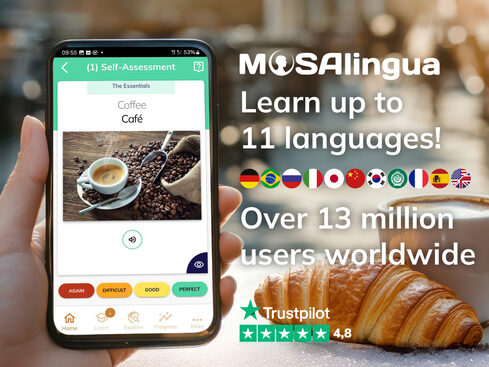
🌟 Bonus Tip: Need inspiration? The MosaLingua team is always by your side during your learning to keep you motivated and coach you in your target language:
Conclusion: Bringing it All Together
To learn a language while traveling isn’t just about words—it’s about transformation.
It’s about stepping outside your comfort zone, embracing the unknown, and discovering a deeper connection to the places you visit. It’s about turning strangers into conversations, and conversations into memories.
You don’t need to be fluent or perfect: you just need to start.
So the next time you pack your bags, bring your curiosity with you. Say hello in a new language. Order that coffee with confidence. Ask for directions—even if you stumble through the sentence.
Because somewhere between the mistakes and the breakthroughs, you’ll find something FAR more valuable than fluency – human connection! ❤️🔗🤝
🌟 Ready to Jumpstart Your Language Journey? 🌟
Join the 13+ Million users worldwide leveling-up their travels with MosaLingua:
4.5/5★ Rating
(*Affiliate disclaimer: We partner with MosaLingua to help offer their amazing language learning solutions, and we may earn a commission when you sign-up for their services through our affiliate links in this article. Thank you!)
